




The complete guide
How to Choose a Cabinet Humidor That Actually Keeps Cigars Right
The problem with keeping cigars in a drawer
Most people start the same way. A few cigars get picked up on a trip, they go in a desk drawer or a cupboard, and three weeks later the wrappers have gone brittle and the draw is tight and bitter. Nothing was done wrong, exactly. Cigars just lose moisture to the room, and a drawer offers no resistance at all.
A cigar is tobacco leaf with water in it. The water carries the oils that create flavour. Drop below the mid-sixties in relative humidity and the leaf dries, shrinks and cracks. Push above the mid-seventies and you invite mould and a burn that refuses to stay lit. The sweet spot most people aim for is 65 to 75 percent, and the whole job of a cabinet humidor is to hold that range without you thinking about it every day.
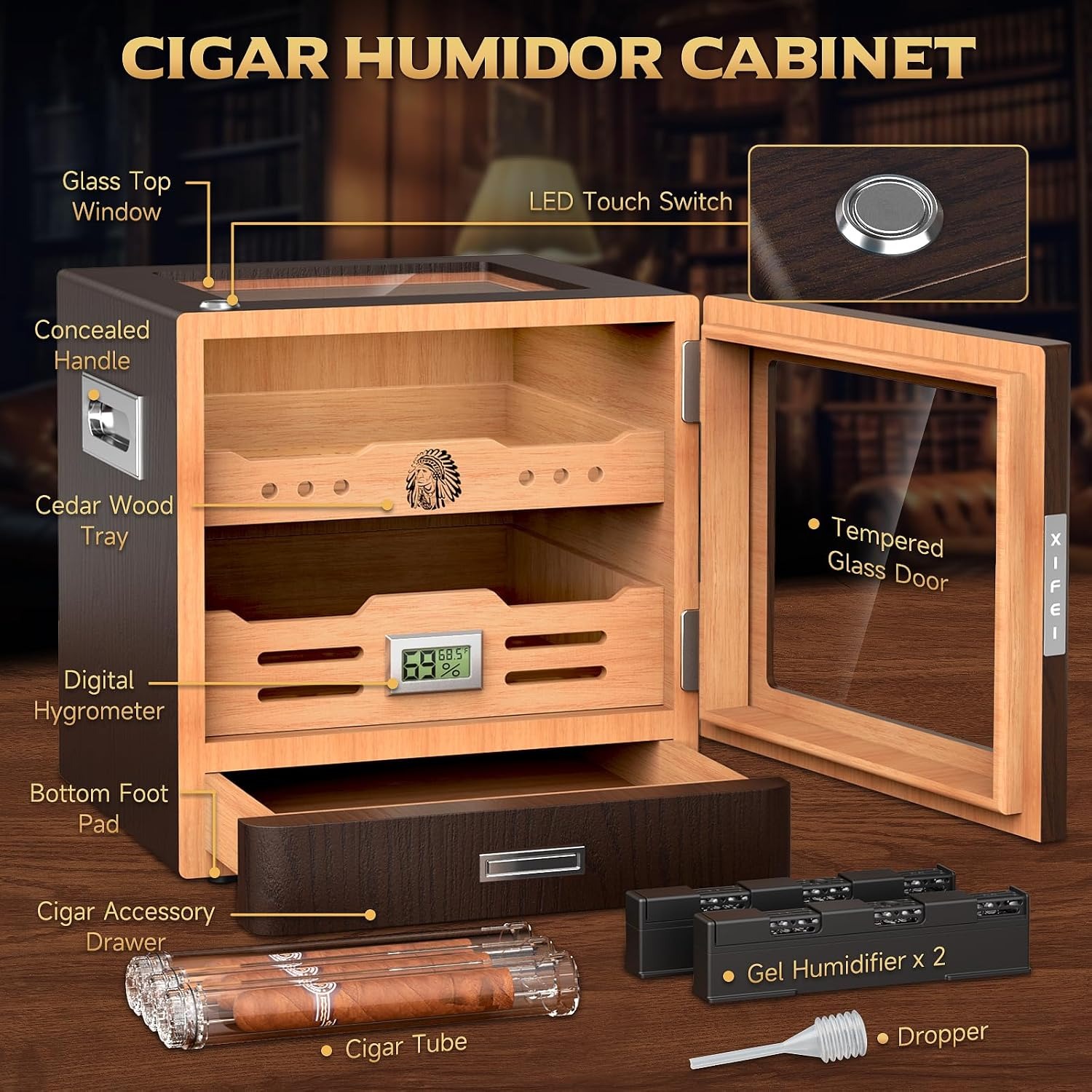
This XIFEI cabinet does it with four things working together. Cedar on the inside. A sealed door. Gel humidifiers. And a digital hygrometer so you can see what is actually going on instead of hoping.
How a glass door humidor cabinet works
The cedar does the quiet work. It absorbs moisture when the air gets damp and gives it back when the air dries out, which flattens the peaks and troughs that would otherwise hit your cigars. That buffering effect is why cedar has been the standard interior timber for cigar storage for well over a century. It also smells right, which matters more than people expect.
The seal does the obvious work. This cabinet uses a magnetic-sealed sliding door with tempered glass on two sides. Every time a humidor opens, dry room air pours in and the system has to recover. A tight seal means fewer of those recoveries, and a glass front means you can check the hygrometer reading without opening anything at all. That small habit change keeps conditions far steadier than you would guess.
The gel humidifiers supply the moisture. There are two of them, and gel is the forgiving option. It releases slowly rather than dumping humidity in a burst, and it tolerates a few days of neglect. You refill with distilled water, never tap water, because minerals clog the gel and chlorine does no favours to tobacco.
The hygrometer closes the loop. A digital readout tells you the number, and the number tells you whether to refill, open a vent or move the cabinet somewhere less exposed. Without it you are storing cigars by faith.
Who this cabinet suits
Capacity is the first filter. This one holds roughly 80 to 100 cigars depending on size, which puts it between a small travel box and a full floor-standing unit. If you keep a working rotation of favourites plus a handful of special sticks, that is comfortable. If you buy by the box and age for years, you will want something larger eventually.
Size is the second filter. At 25.8 cm deep, 26 cm wide and 32.8 cm tall, it sits on a surface rather than on the floor. A sideboard, a bar top, an office credenza or a shelf with headroom all work. It weighs 5.44 kg, so the surface needs to be solid but not reinforced.
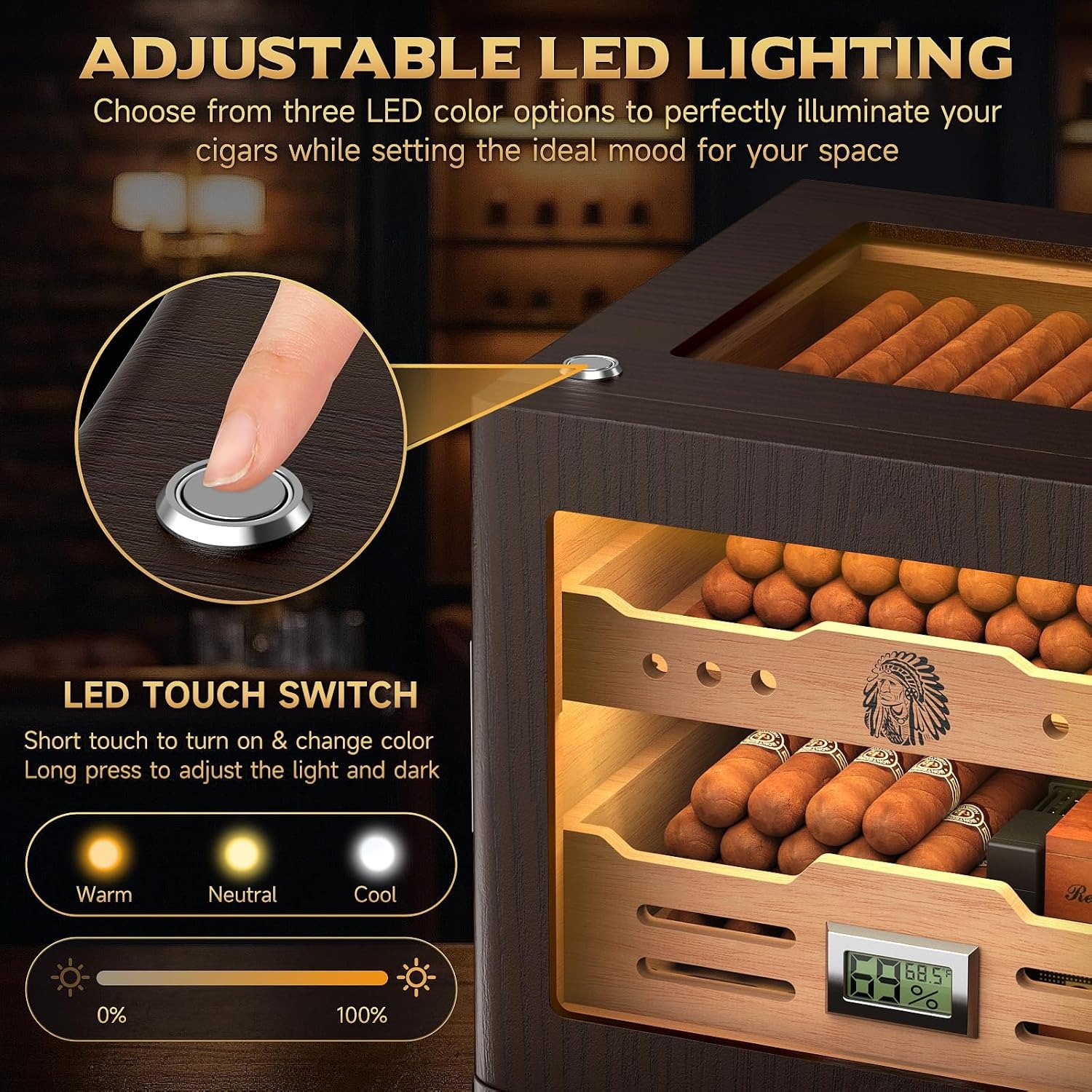
The third filter is whether you want the collection seen. Plenty of humidors are solid timber boxes that hide everything. This one is built to display, with glass panels and a three-tone LED system you control from a touch button on top. Short press to turn it on and cycle between cool, neutral and warm. Long press to dim. In a cigar room or lounge, warm light at low brightness looks the part. In an office, cool light reads cleaner.
If you share your space with people who find smoking gear untidy, the base drawer helps. Cutters, lighters, punches and spare humidifier packs all live in there, out of sight, which keeps the cabinet looking like furniture.
Setting it up properly
The cabinet arrives assembled, so there is no building to do. What there is, and what people skip, is seasoning.
New cedar is dry. If you load cigars straight in, the wood pulls moisture out of them before it settles. Instead, charge a humidifier, place it inside, close the door and leave it alone for a few days. Watch the hygrometer. When the reading holds steady inside the 65 to 75 percent band, the cedar has taken on what it needs and the cabinet is ready. Two to five days is typical, longer in a very dry climate.
Placement matters more than most setup steps. Keep the cabinet out of direct sunlight, away from heaters, radiators, air conditioning vents and draughty windows. An interior wall holds temperature better than an exterior one. Heat plus high humidity is the combination that causes trouble, so a room that stays moderate and consistent is worth more than any gadget.
Once loaded, resist the urge to open the door constantly. Check the reading through the glass. That is the entire reason the glass is there.
Organising the inside
There are three levels and two compartments, with double-layer cedar trays and a removable shelf. How you use them is personal, but a few approaches work well.
Sorting by size is the simplest. Keep robustos and shorter smokes on one tray, longer or larger ring gauge cigars on the other, so nothing gets crushed and you can find what you want quickly.
Sorting by readiness suits anyone who ages cigars. One tray for things you are smoking this month, another for sticks resting longer. Taking the shelf out gives you a taller single space if you want to store boxes rather than loose cigars.
Whatever system you pick, leave a little air between cigars. Packing them shoulder to shoulder slows humidity movement and makes the cabinet harder to keep even top to bottom.
Keeping it right over time
The maintenance load is light. Glance at the hygrometer every few days once things have settled. Refill the gel humidifiers with distilled water when the reading starts drifting down, which for most people is every few weeks depending on how dry the room is and how often the door opens.
Cleaning is mostly restraint. Wipe the glass and outer timber with a soft cloth, dry or barely damp. Do not use polish, solvent or anything scented near the cedar. The wood absorbs odours and hands them straight to your cigars, which is a slow and annoying problem to undo.
Pay closer attention during seasonal changes. Winter heating dries a room fast. Summer humidity pushes the other way. A couple of extra checks when the weather turns saves you from finding out the hard way.
The included acrylic travel tube is worth keeping in the drawer. It holds three cigars up to 55 ring gauge and 6.3 inches, has gel beads built in and a silicone seal in the lid. For a dinner or a trip, it beats carrying loose cigars in a jacket pocket and hoping.
The short version
A drawer will ruin cigars quietly. A cabinet humidor stops that by combining cedar, a sealed door and a steady moisture source, then lets you verify it with a hygrometer reading.
This XIFEI XF-GZ02 covers all of that in a dark brown wood and tempered glass body measuring 25.8 x 26 x 32.8 cm. It holds roughly 80 to 100 cigars across three levels, includes a digital hygrometer and two gel humidifiers rated for 65 to 75 percent, adds a drawer for accessories and a dimmable three-tone LED system, and comes ready to use with no assembly.
Season it, place it somewhere stable and cool, check the reading through the glass, and refill with distilled water when it asks. That is the whole job. The cigars take care of the rest.